The inspiration…
While scrolling through instagram, I stumbled accross Kim Youngwoong’s design of a harleqin beetle. At once, I was captivated. There are only few models of this beetle and it was by far the best take on this beetle, I had seen so far. So I decided to fold it.
However, it also reminded me of Robert Lang’s design of the same subject, that had a completely different structure.
…and the experiment
At the same time, I was thinking a lot about efficiency. So I decided to make an experiment. I wanted to know, wether efficiency affects just the size of the model.
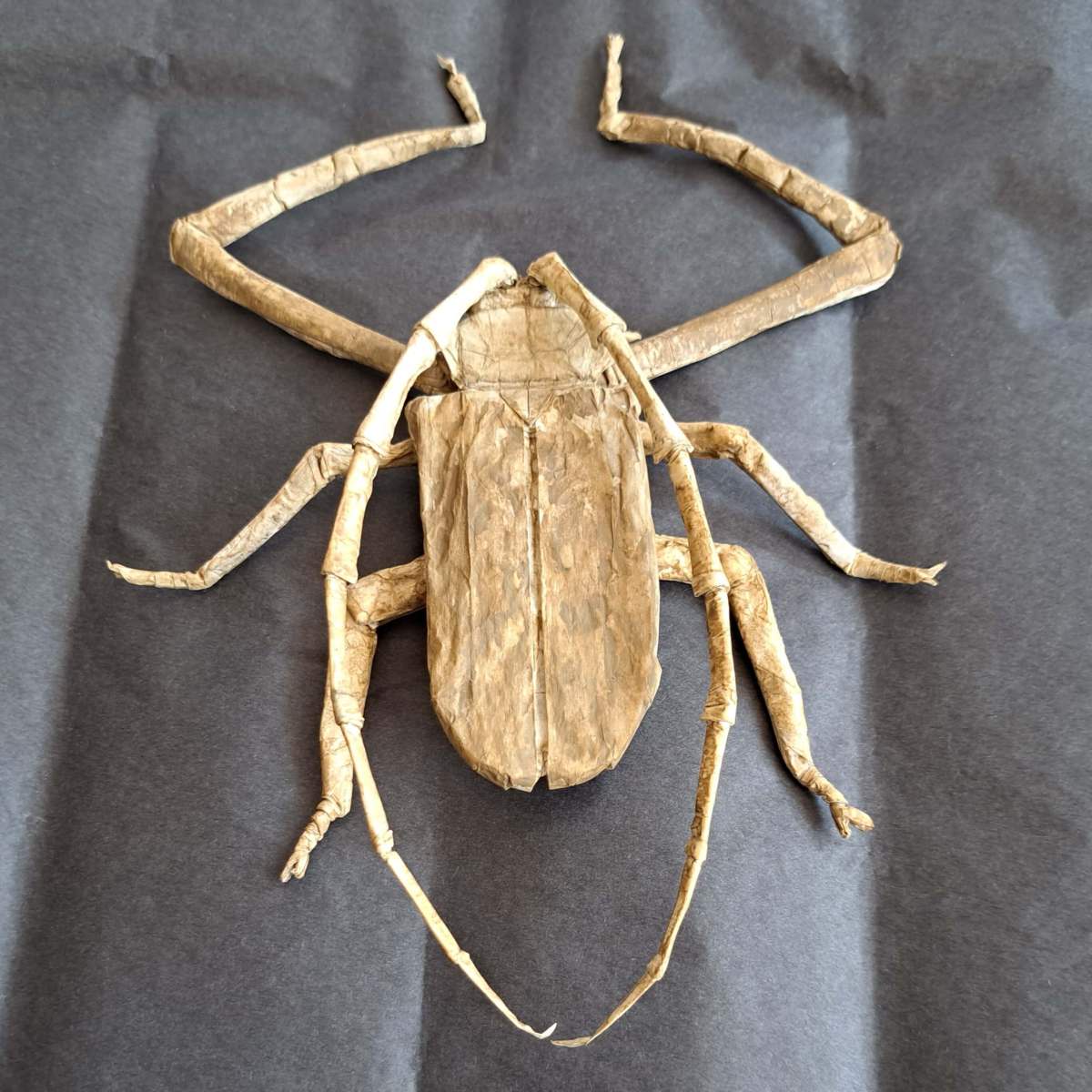
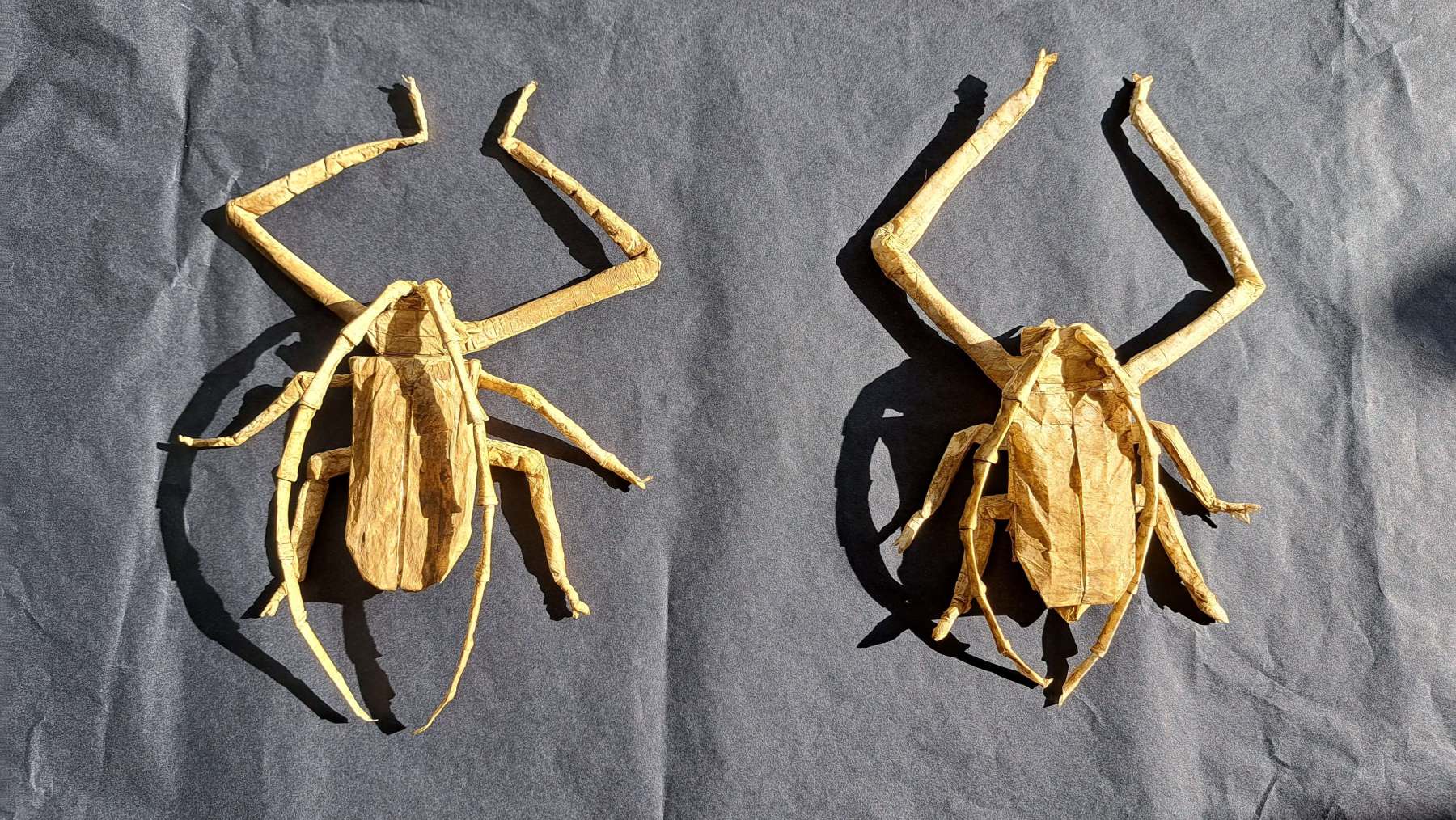
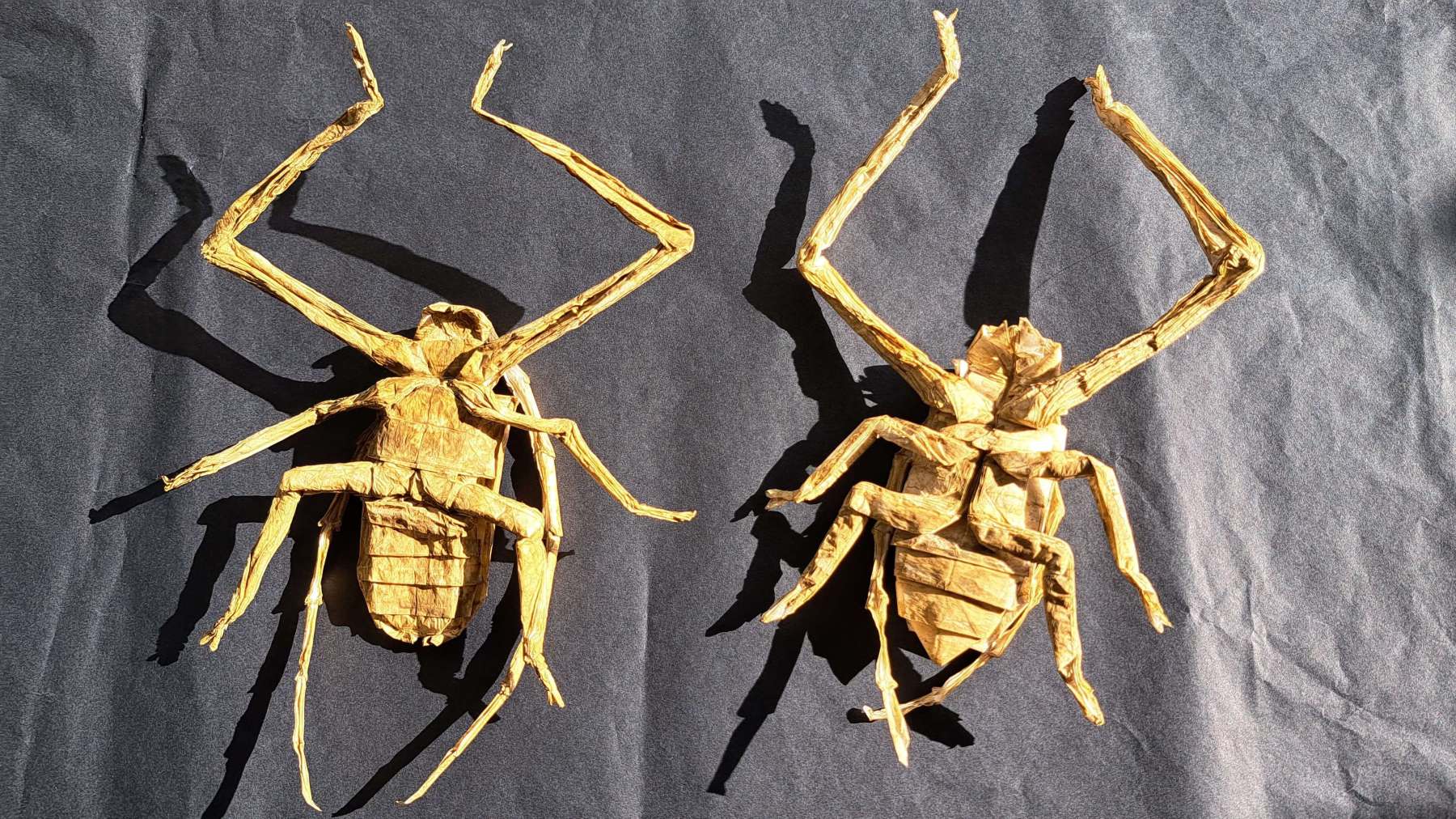
For folding, I used two 61cm squares of the same paper. The resulting body of my design (head to abdomen) is 10 cm long, while Kim’s beetle is 9 cm long. Except for the shorter legs, my designs has less layers and therefore thinner front legs and antlers. You can compare them side by side above, my design is the left beetle, Kim’s is the right one. Funnily, due to the shaping of the arms, they seem nearly the same size.
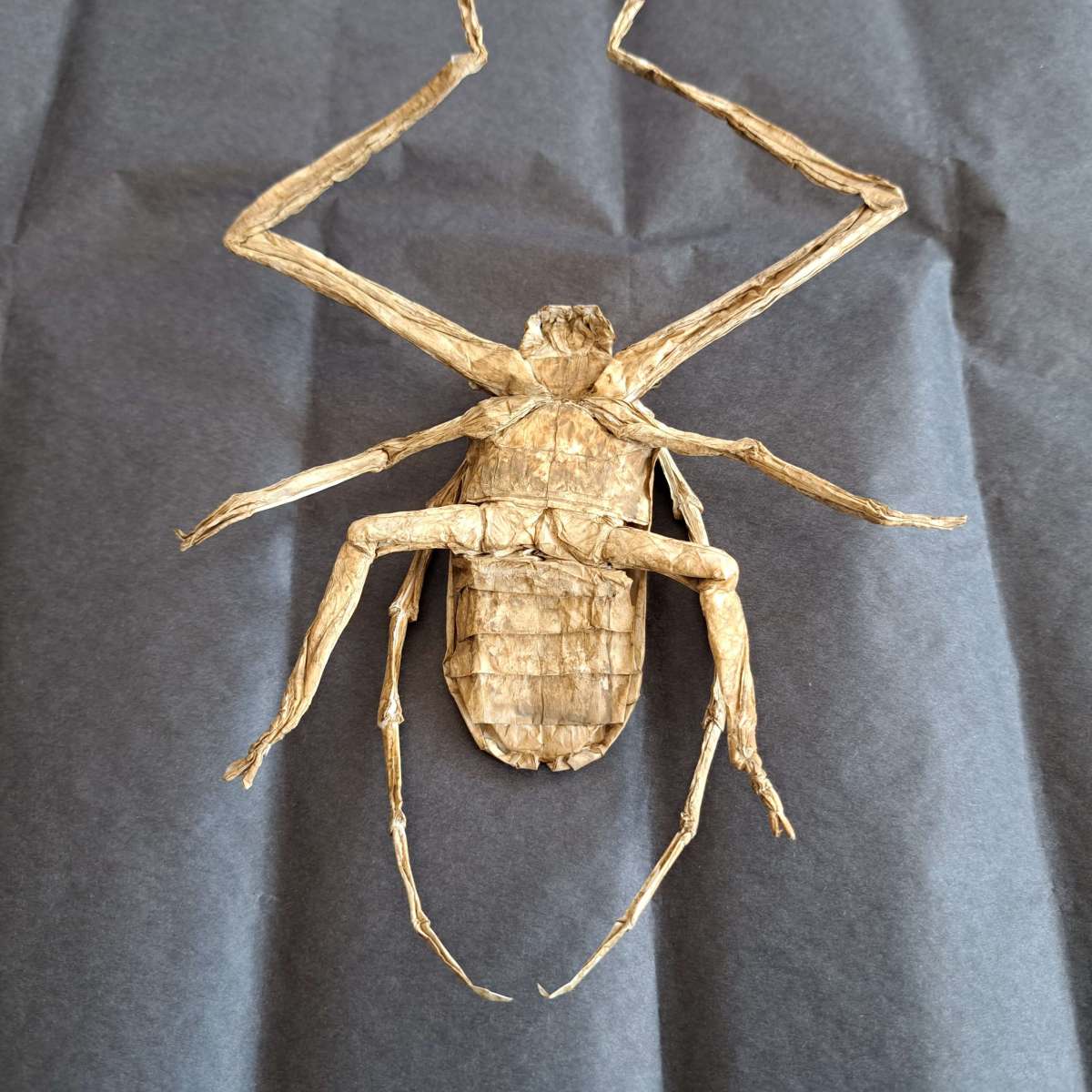
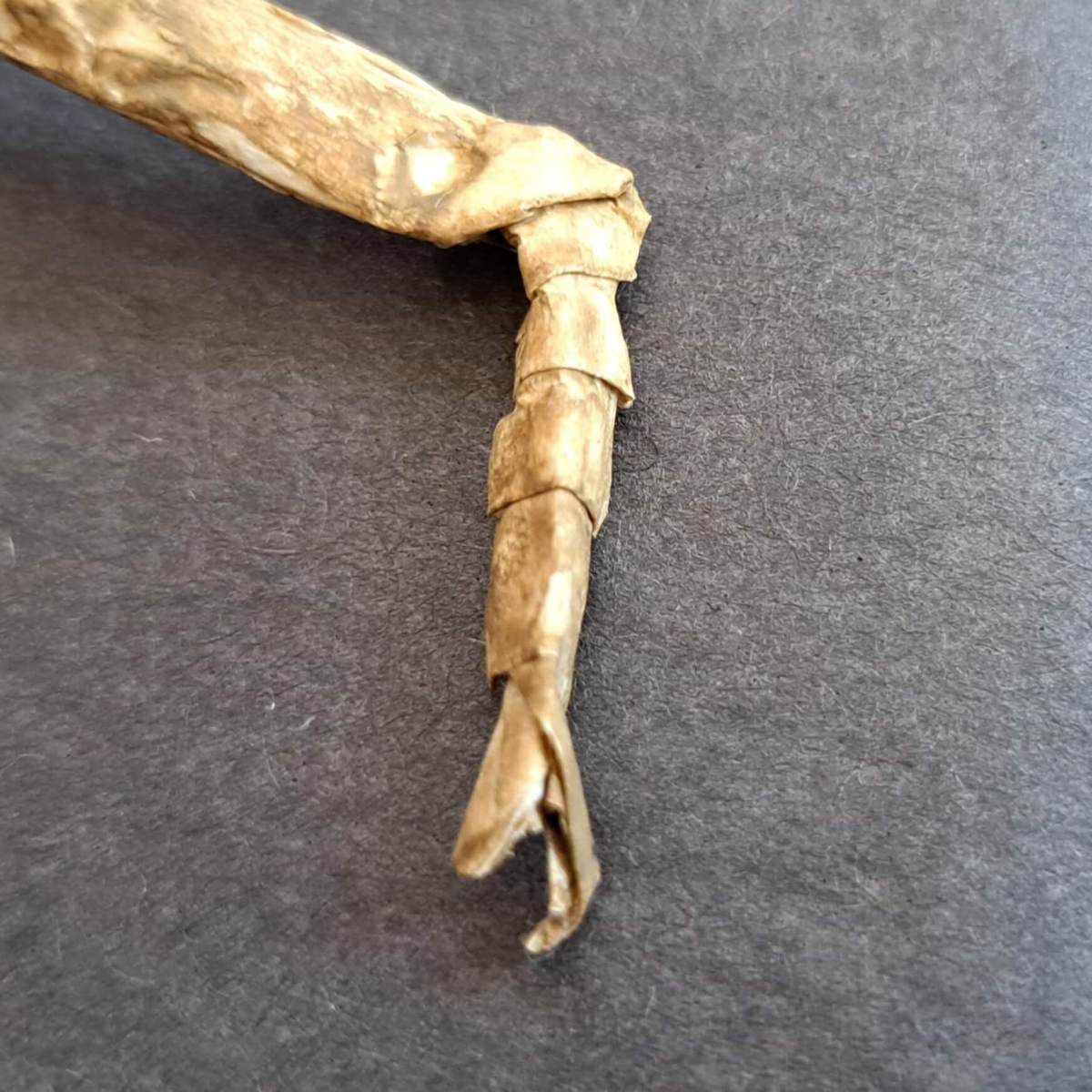
The different amounts of layers had many effects when folding the two models. Since I am probably biased as a designer, I will let the pictures speak for themselves. All details here are from my design. You can find pictures of Kim’s design on his Instagram (linked above).



The design process
At the beginning, I needed proportions for a harleqin beetle. So, I copied the proportions of middle legs and the length of the abdomen. However that was not possible for the antlers and frontlegs due to my packing. For the hind legs, I started by experimenting with scrap paper and polishing my findings.
Even though I started similar to Lang’s structure, I deviated from it early on. Needing more space for details, I had to adjust the structure again and again. In the end, I don’t think one can reconstruct Lang’s design by knowing mine and I can safely call it my own model.
After making space for the legs, I worked on the head. Since I had far less available layers than Kim, I desgined it differently. I think I managed to keep the amount of details similar enough. In the meantime, I shifted the legs closer to the head. Then I got to work on the abdomen. Mostly through trial and error, I slowly made my way towards the middle. Only in the end, the crease pattern made sense. Without the “draw a flat foldable line” function in Oriedita, this would not have been possible. I was surprised, how much sense the abdomen made, as soon as all lines in place.
Last, I wanted to make a clean belly. The segment between Hind legs and Middle legs was easy to design. However, I also needed a good transition for the Front and Middle legs.
Experimenting with scrap paper, I discovered, that the transition I wanted could be made with a tunnel of layers. So, I needed to make said tunnel. I placed the opening underneath the forelegs. Making the pleats on the antlers, I gathered the necessary paper. Then I began shifting…
The fold
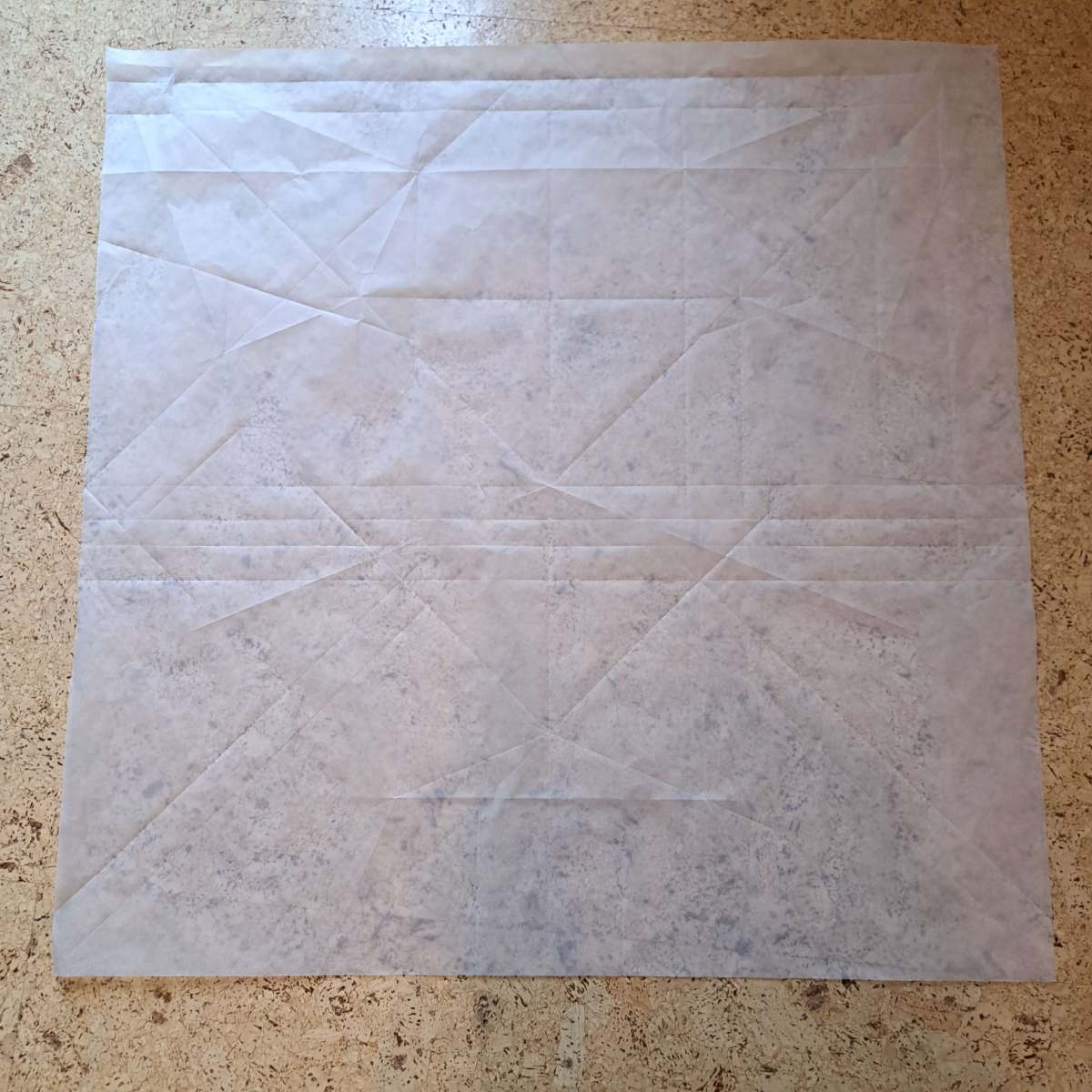
Precreasing was quite strange. For this crease pattern, I usually only had two or three options, how to proceed with precreasing. It might have helped if I had used more than one reference, but I still ended up with a clean crease pattern.
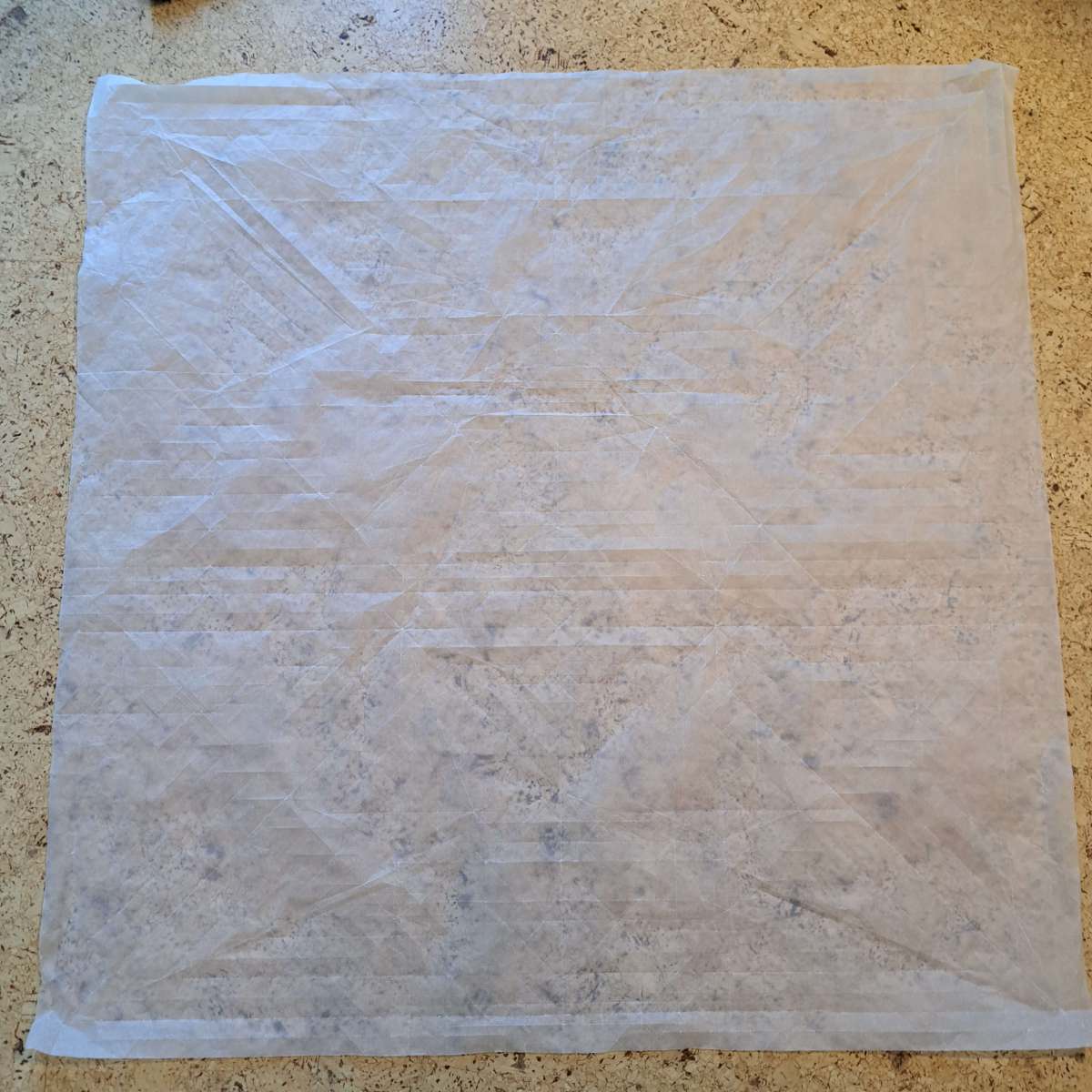
Collapsing my harleqin beetle was purely satisfiying. Breaking up the collapse in several parts, it was not even that hard. I didn’t measure the exact time, but it definitely felt like one of my longer collapses, probably due to all the shifting at the end of the collapse. Surprisingly, I did not found the shifting of layers boring. Instead, it was really fun to see, how the legs seemingly swap their positions.
The crease pattern and the folding process can be found below. I share it in order for you to verify the differences in efficiency and make your own experiments.